
Amelia Recorded Deeds and Related Instruments
The Amelia Circuit Court Clerk keeps the county's land instruments. The Virginia SRA page offers the statewide access route. Each instrument group does distinct work. A deed records a transfer. A deed of trust secures a loan. A release or satisfaction shows that an earlier encumbrance was discharged. The index entry helps you find the instrument. It will not summarize every right that touches the land. For that, the recorded pages must be read in full. A single parcel can carry interests the index never spells out.
| Deed Type | What It Does | Common Use |
|---|---|---|
| Deed | Records a transfer of an interest in land | Confirm the conveyance and parties |
| Deed of trust | Records security for a loan | Trace financing and later release |
| Assignment or release | Changes or discharges a recorded loan interest | Follow a deed-of-trust record |
| Easement or restriction | Records use rights or limits affecting land | Review access and title context |
| Plat | Shows a recorded division or mapped land detail | Compare lots and legal descriptions |
The LVA catalog also lists mechanics' lien records from 1895 to 1923 and VEPCO easement plats from the 1970s. Neither is a deed conveying the parcel. A lien or easement can still shape the interests a title review must weigh. Search the land index alongside any related court file when a recorded claim needs context.
Reading the Amelia Grantor-Grantee Trail
Virginia COVERS is the SRA system. It may allow free index-only searching. That works where the local clerk enables it. Images are a separate layer. Opening them can require clerk authorization, a subscriber agreement, and payment. Amelia's online start year, result cap, and exact search fields are not settled facts. Confirm them before counting on a specific deed image. Check the Available Courts list. Then ask the Circuit Clerk what the county actually permits online.
- Search the present record name as grantee and identify candidate deeds for the parcel.
- Read the instrument to capture the grantor, legal description, recording date, and cited prior deed.
- Search that grantor as grantee, then compare acreage, road, plat, and adjoining-owner clues.
- When the index has no image, request it from the clerk; use an archival index or book for older years.
- Grantor
- The party conveying an interest in the instrument.
- Grantee
- The party receiving the interest described in the instrument.
- Chain of title
- The sequence of recorded transfers used to follow title through time.
- Book and page
- A volume-and-page reference; confirm the exact citation format in the clerk index.
Requesting an Amelia Deed Copy
When an image will not open, contact the Amelia Circuit Court Clerk, Marilyn Wilson, at P.O. Box 237, Courthouse Square, Amelia, VA 23002-0237. The clerk page lists 804-561-2128, fax 804-561-6364, and office hours of 8:30 a.m. to 4:30 p.m. Give the grantor and grantee, the approximate recording date, the parcel or legal description, and any index citation. Ask whether a copy can be mailed or sent electronically, and whether certification is available.
The statewide fee schedule sets $0.50 per page or electronic image, with up to $5 for digital certification in the described circumstances. Confirm current Amelia counter, postage, and certification charges with the clerk. The office contact screen shows the requester's route, not a sample deed result. Review the Amelia Circuit Court Clerk contact page before sending a request.
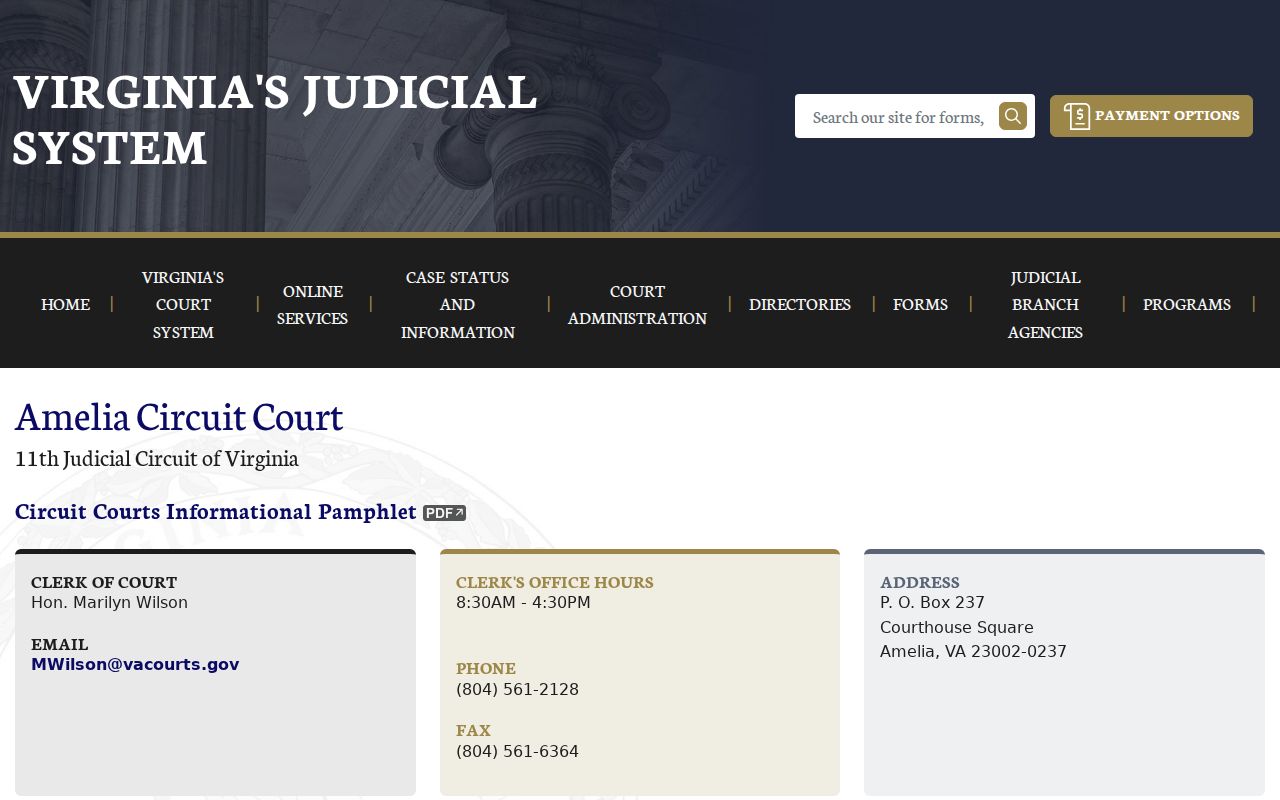
The contact listing gives the local route for a certified copy or an index entry that needs an image. It also settles fee and certification questions before a request goes out.
Recorded, not guaranteed. An Amelia deed index shows filed instruments, not a legal opinion that title is clear. Review the deed and related releases, liens, plats, and court orders with a qualified title professional when relying on the chain.
Amelia COVERS Index and Image Access
The Virginia land-record access page explains that participating clerks can allow free index-only use. Document images may require a clerk-authorized subscription. The index and the image are separate layers. A party or instrument entry can locate a document. It may not carry the words, signatures, exhibits, or legal description a careful review demands.
The Virginia SRA access page describes the state system, not Amelia's local coverage or pricing. The available-courts listing shows current local access. If the image route is closed, use the index citation to ask the clerk for a copy. You can also request the related volume through the archival catalog. A record only counts as online once its image is actually reachable.
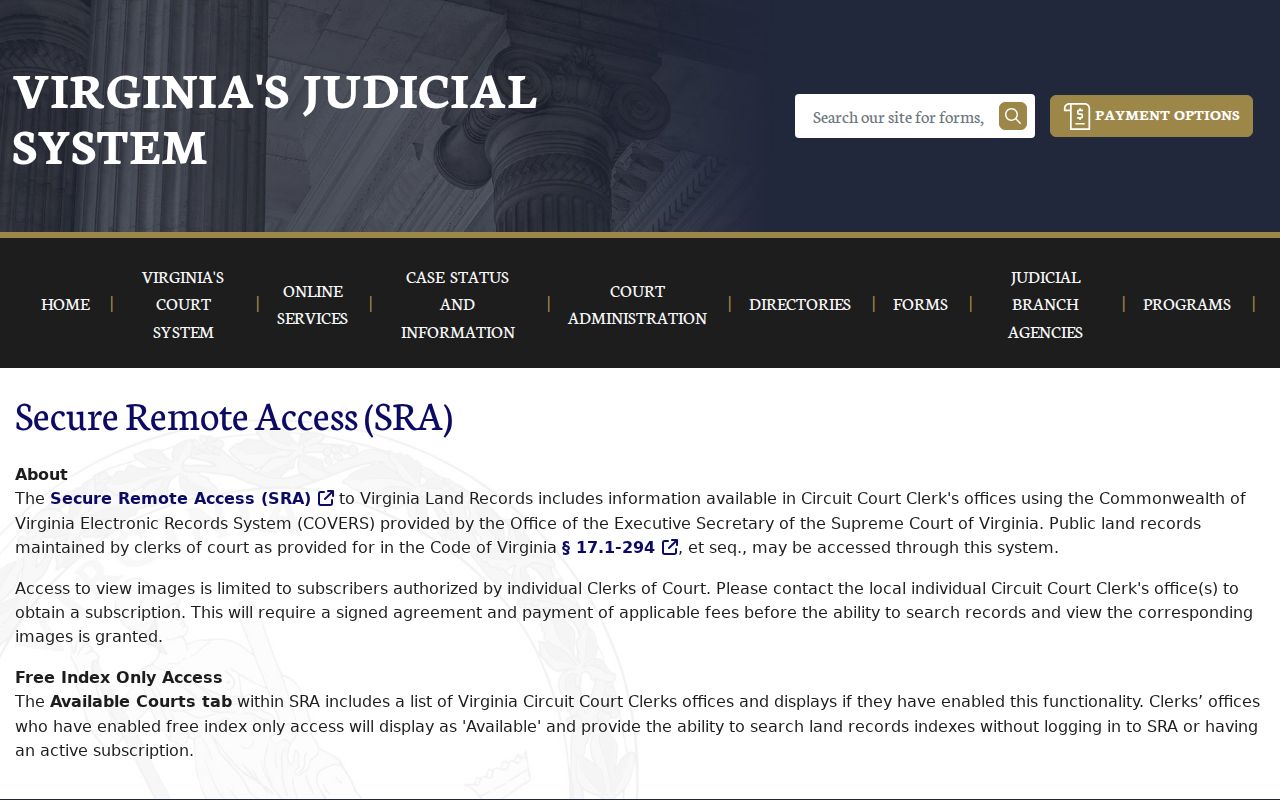
This capture illustrates the index-versus-image distinction that shapes an online deed search.
Amelia Deeds Before the Digital Index
The Library of Virginia catalog lists Amelia grantor indexes for 1954 through 1974. These are split into A–K and L–Z. The catalog also covers deed books and historic plats. That series is documented. It does not fix the full chronology of the current SRA index. When a chain reaches back past the online entries, search the LVA catalog by record series and date. Then request the microfilm, volume, or finding aid that fits.
Amelia was formed in 1735. For land before that, Prince George or Brunswick may hold the earlier jurisdictional record. Later boundary changes can push a tract's history toward Prince Edward or Nottoway instead. Match legal descriptions and locality history, not just a family name. The microfilm catalog image supplies the series names that frame a request. Open the Library of Virginia Amelia County microfilm catalog. Identify a title and date range there.
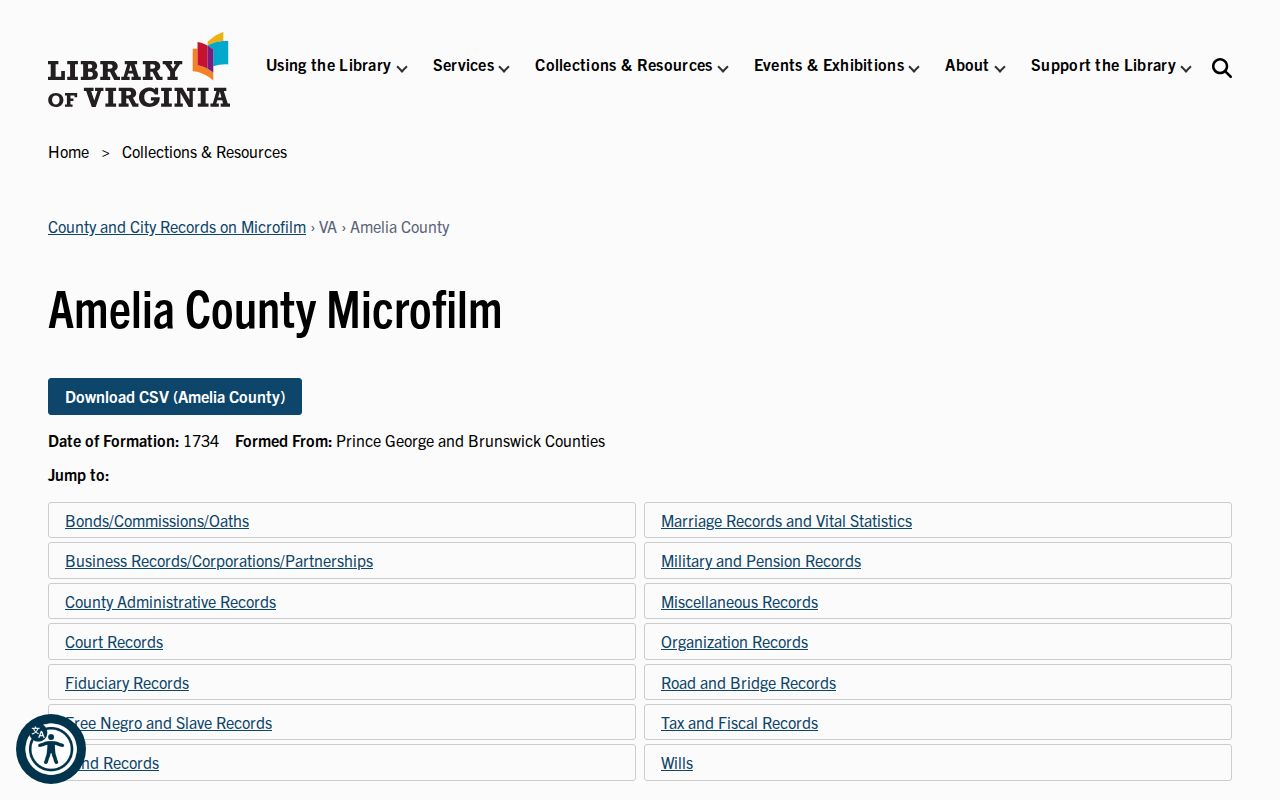
A finding aid narrows the archive search. The chosen film or book must still be read against the parcel description before any line is trusted.
Amelia Plats, Easements, and Lines
Plats matter when a deed refers to a lot, road, right-of-way, or subdivision. The Amelia microfilm catalog lists plats tied to Valentine W. and Elizabeth Southall in 1815, 1853, and 1885. It also covers processioners' books from several periods, surveyors' returns from 1736 to 1751, and VEPCO easement plats from the 1970s. These records can explain line calls or utility rights. A modern parcel view omits them entirely.
Ask the Circuit Clerk for recorded plats and Planning for an approval file. A plat approval summary is not the recorded map. Compare its lot dimensions and adjoining parcels with the deed itself. InteractiveGIS can help locate the tract. Its agreement states that deeds and recorded plats control legal acreage and ownership.
When an Amelia Estate Explains a Deed
Estate papers often explain a parcel's path. A will, fiduciary, heir, or commissioner can carry title before any sale deed appears. Amelia's LVA catalog lists a general will index covering 1734–1926, plus later will and fiduciary indexes. Search the estate name first. Then look for a will, land-sale order, partition record, or commissioner's deed; probate explains the family and who held authority, while the recorded land instrument connects that event to the parcel.
Death records are not title records. Virginia restricts recent vital certificates. Certified copies require a written request and identification. For older family context, try the LVA or local historical collections, and never assume an heir received a particular tract. Wait for a deed, order, or other land record to confirm the link.
Amelia Mechanics’ Liens and Deeds of Trust
A deed of trust secures a loan, while the deed conveys the parcel. They do different jobs. Alongside any transfer, search assignments, modifications, releases, and satisfactions. A paid mortgage should end with a recorded release or certificate of satisfaction. Neither an assessor result nor a tax receipt can show that the lien was cleared. Current lien instruments are recorded with the Circuit Clerk. Some also carry a court-file trail.
The LVA catalog names Amelia mechanics' lien records from 1895–1923. Use that series when an old improvement dispute or encumbrance appears in a chain. Search the claimant or contractor as well as the property owner. Match the legal description. An index entry is only a pointer. Pull the filed instrument to understand its status and scope.
Amelia Court Cases Need a Local Clerk
Foreclosures, boundary disputes, judgments, and quiet-title matters can leave a court file. They can also leave a land-record instrument. Virginia has no statewide circuit-court search for many cases. Search an available system by party or case number. Then contact Amelia's Circuit Clerk when the file is not online. A docket does not replace the deed, release, or commissioner's instrument that affects title. The Virginia court self-help notice explains the search limit and the local-clerk fallback.
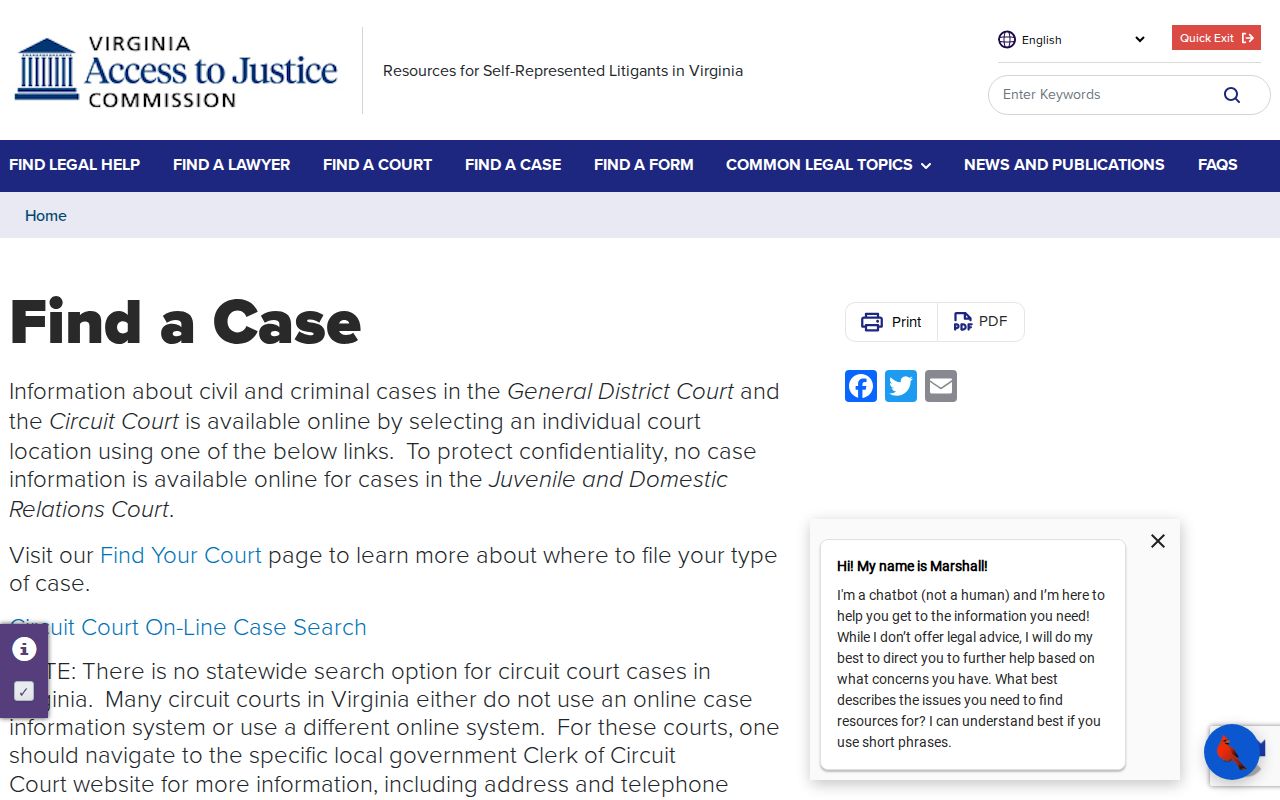
Use the clerk's office for the local civil file. Use the land index for the instrument recorded against the property.
Amelia Deeds in the State Archives
The ARVAS collection description covers Amelia records from 1736 to 1914 in 43 boxes. The Circuit Court supplied some of it. The historical society and individuals transferred the rest. No items are available for direct download. Use the finding aid and EAD description to identify a series, then ask the Library of Virginia about access, reproduction, or an in-person visit.
The ARVAS Amelia finding aid is a discovery tool, not a complete deed index. Historical Society material can help tie a family or landmark to a tract. Title evidence lives in the recorded deed and plat. Keep the archive request specific. Include the name, approximate date, place, and any book or series reference.
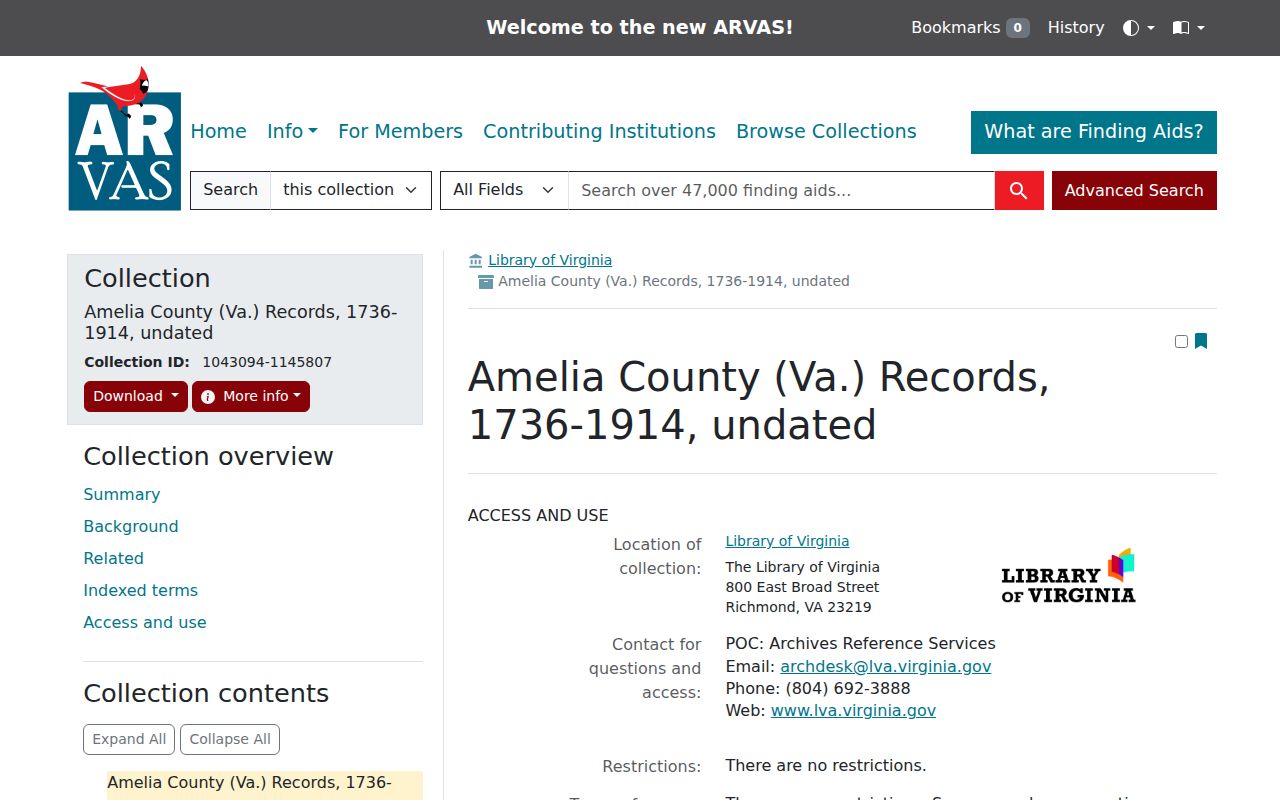
The archive describes paper records that may not surface in an online index or image search.