
How to Find an Amelia Property Owner
No single lookup settles the question. Work the county's record path instead. InteractiveGIS maps the parcel from a situs address. The Commissioner of the Revenue assesses real estate and keeps the tax roll for Amelia County. A Treasurer ticket can tie a tax bill to a parcel, but it proves nothing about title. To see who received the land, turn to the Circuit Court Clerk's deed records.
- Locate the property in InteractiveGIS or through the county assessment route, and write down the parcel reference.
- Use the parcel to keep the assessment and Treasurer ticket tied to the same land.
- Search the latest deed in COVERS/SRA and read the grantee and legal description.
- If the grantee is an LLC, trust, or estate, check its state or probate record without treating that record as the deed.
Which Amelia Record Names an Owner
Owner names surface in several records. The Commissioner's assessment record names the tax owner. The deed names the grantee and grantor. The SCC explains a business entity and GIS orients the parcel, but neither instrument transfers Amelia County land. Before you rely on a name, confirm the parcel-card label and its source.
| Source | Owner Info It Gives | Access |
|---|---|---|
| Commissioner assessment | Tax owner and property data; exact card fields need live confirmation | County assessment information |
| COVERS/SRA land index | Parties to a recorded deed or related instrument | Index access varies by clerk |
| Virginia SCC | Business-entity filings that can clarify an LLC name | Official state system |
| InteractiveGIS | Parcel location and map reference | Public map after agreement |
The owner of record is not always the occupant. A mailing address may sit outside Amelia County. An LLC or an estate may hold title instead of a person. Read the deed to confirm the recorded grantee, and never use property records to guess who lives at the property.
Limits of an Amelia Owner Search
Every public record has limits. Some entries run late, fall incomplete, or sit closed by law. Virginia's Address Confidentiality Program gives eligible participants a substitute address for protection. A voter registration lookup covers election status, not land ownership. A deed search cannot show who lives in a house or catch every claim against title, so keep the question tied to land and confirm it with the right custodian.
Lawful use. Use owner data for property diligence, tax review, family history, or public accountability. Do not use names or addresses to stalk, threaten, or harass anyone.
Amelia Assessment Owner Is a Starting Point
The Commissioner of the Revenue runs Amelia County's assessment function. Its real-estate page describes the county's assessment information. The office publishes no live owner card or search-by-name tool online. If the web route falls short, call the Commissioner. Ask whether an owner, address, or parcel inquiry is available at the office.
When you get a result, copy the printed name exactly as shown. Copy the mailing address and parcel reference too. Never turn a trust or company name into a person's name without a supporting record. Remember what the record is. The roll is a tax record. It is a strong lead, while the deed confirms the recorded conveyance.
Confirm the Name on Amelia’s Latest Deed
Once the parcel is settled, search Virginia COVERS/SRA for the newest deed matching its legal description. Compare the grantee with the assessment owner. The SRA may offer a free index where enabled. Images can require an authorized subscription. Amelia County's online coverage years and image access are not guaranteed, so call the Circuit Clerk when an entry will not open.
A deed's recording date is not its signing date. Read the whole instrument and any prior deed it cites. For a present-day answer, the Amelia current owner record route explains how to compare the roll against the deed.
Amelia LLC, Trust, and Estate Names
A grantee can be an LLC, trustee, executor, or estate. Those labels name the party in the instrument. They do not capture every person with an interest. For an LLC, the Virginia SCC Clerk's Information System is the state business-record source. For an estate, the Circuit Clerk's wills and fiduciary files may explain who had authority to convey Amelia County land.
Search exact spelling, initials, punctuation, and role words. Match any state entity record to the deed by legal name and filing history. Do not treat an SCC agent, officer, or office address as proof of ownership. The deed remains central. Any court order behind it matters just as much.
Amelia Owner Mail Is Not Property Situs
The mailing address tells you where Amelia County sends notices. The situs tells you where the land sits. The two often differ. An owner may live elsewhere, rent a post-office box, or take mail through an entity. An Amelia Court House address creates no separate municipal roll, since the county keeps one assessment and deed set for the CDP and surrounding land.
Trace a name the careful way. Settle the parcel first with its legal description, road, acreage, and plat reference. Use the mailing field only for its stated purpose. Never assume a tax-notice recipient lives on the parcel.
Follow Amelia Probate into Land Records
A deceased owner changes the task. Amelia probate indexes point the way. The LVA catalog lists wills from 1734 through 1926, plus later fiduciary index periods. A will can explain why a parcel changed hands. So can a land-sale order or a commissioner's document. Read those first for context. Then search Amelia land records for the deed. It ties the estate event to the tract itself.
One caution matters here. A death certificate proves death, not a transfer of title. Virginia keeps recent vital records restricted, and certified copies require identification. For older family questions, the Library of Virginia serves well. Local archives are also better starting points. In the end, the ownership chain still rests on a recorded instrument. Otherwise it rests on court authority connected to the land.
Use Amelia Sources for Their Own Purpose
Each Amelia record answers its own question. The Virginia voter-status lookup handles registration status under election-law rules. It does not show who owns a parcel. The state court portal points to some case files. But it is no substitute for a land index. A professional license may name a surveyor or contractor. Yet it says nothing about who holds title to the site where that person worked.
The official election lookup page shows exactly this limit. Match a public name search to the right record type. Do not treat it as an owner directory. Use the Virginia voter lookup only for registration status.
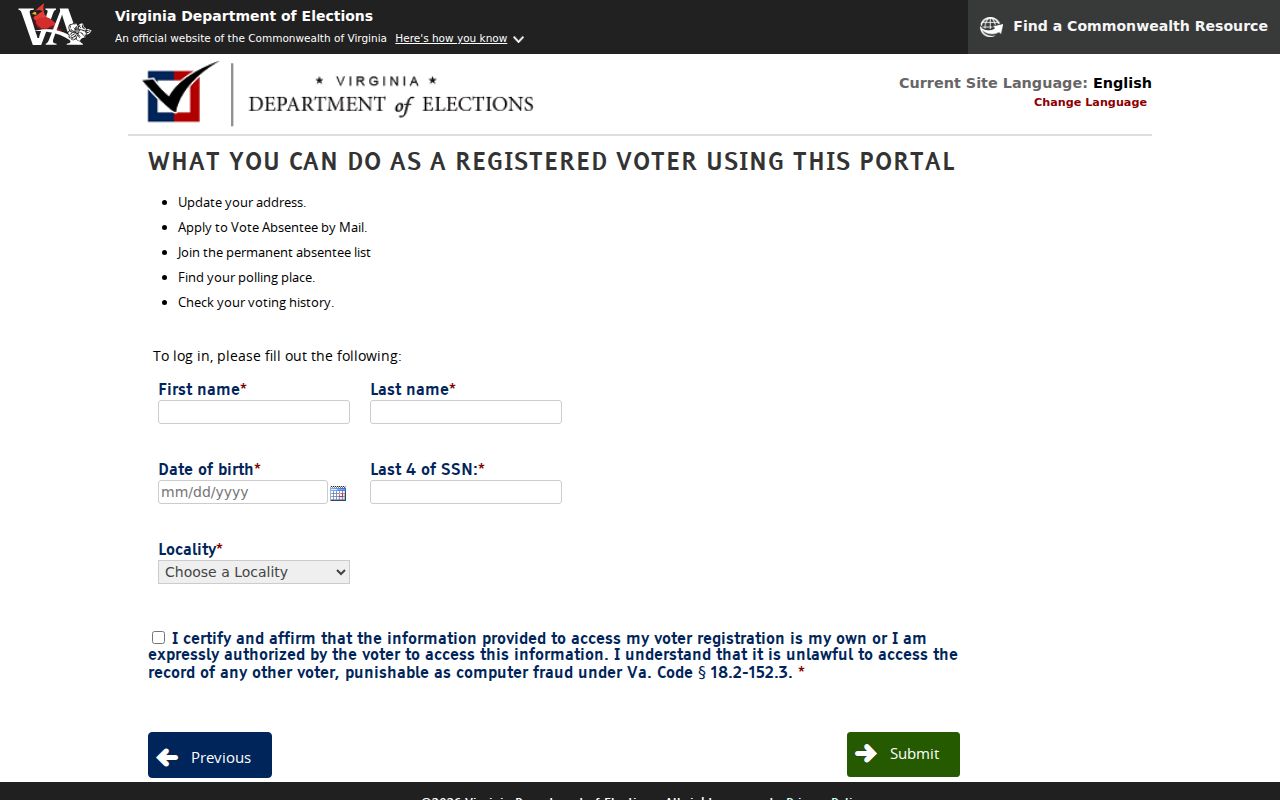
For questions of title, go back to the Amelia assessment roll and the recorded deed. An election record, whatever else it tells you, cannot settle who owns the land.
When an Amelia Deed Image Is Unavailable
An index entry without a viewable image is not a dead end. Save the parties, the record date, and the reference. Then call the Amelia Circuit Court Clerk at 804-561-2128 or mail a written copy request to P.O. Box 237, Courthouse Square, Amelia, VA 23002-0237. Ask about copy and certification costs before sending payment.
Older transfers often live in LVA deed indexes and books. Work backward by treating each grantor as a prior grantee, matching acreage, road names, or a plat along the way. A missing online result proves nothing. The deed you need may sit in a microfilm or book series instead.