
Build an Amelia Prior-Owner Timeline
Begin with the most recent deed describing the parcel. Then log each transfer as its own link in the chain of title. Every link needs a source. Amelia's exact COVERS start date is unestablished. Ask the clerk before calling the online index complete for any stretch of years. Microfilm fills the older gaps. The LVA catalog documents a grantor-index run from 1954 to 1974. It also lists older deed books, plats, and special series. Treat the timeline below as a worksheet, not a sample Amelia chain.
| Transfer date | Grantor → Grantee | Deed type | Book / page or reference |
|---|---|---|---|
| Copy from instrument | Prior grantee’s name | As indexed | Exact clerk citation |
| Earlier transfer date | Next prior grantor and grantee | As recorded | Link the same acreage |
| Archive date | Names in older volume | Book or plat reference | Finding aid and series |
Start with the current land index for recent instruments. The LVA catalog points to known microfilm series. The ARVAS finding aid covers archival collections. Older tax lists and court records can help place a person or a tract in time. Still, the chain of title rests on the deed and court instruments that actually affect the land.
Walk Amelia’s Deed Chain Backward
Work every deed the same way. Record the grantor, the grantee, the execution and recording dates if shown, the document type, the book or instrument reference, and the legal description. Search the grantee first to locate the acquisition deed. Then hunt that deed's grantor as a grantee in an earlier transfer. Keep going until the source runs dry or the description stops matching. This approach traces former owners while protecting you from same-name errors.
- Find the latest matching deed with the present grantee name.
- Read the grantor and prior deed reference from the instrument.
- Search that grantor as grantee and compare acreage, road, and adjoining land.
- Repeat through the index, then use the clerk or archive for older books.
- Grantor / grantee
- The transferor and recipient named in a deed.
- Chain of title
- The connected sequence of instruments that traces title through time.
- Legal description
- The tract wording used to identify land, often more stable than an address.
How Deep Amelia Ownership Records Reach
Amelia's surviving records reach surprisingly far back. The LVA microfilm catalog lists a grantor index for Amelia deeds covering 1954 through 1974. The index comes in two alphabetical parts. Beyond that one archival run, the full online chronology remains unverified. LVA also lists deed books and court activity dating to the county's earliest records. Amelia formed in 1735. For land before that year, check the parent counties, Prince George and Brunswick, and then consider later boundary changes involving Prince Edward and Nottoway.
Lawful use. Former-owner research is suited to title review, property history, and family research. Do not use names or addresses to track, threaten, or harass a living person.
Amelia Deed Indexes on Microfilm
The Library of Virginia catalog splits the 1954–1974 grantor index into A–K and L–Z. It also lists deed books, plats, processioners' books, surveyors' returns, and VEPCO easement plats. A catalog entry helps you pick the right film or volume. It does not replace the index pages themselves. Ask the library about microfilm access or interlibrary loan. Give the series name and date range when you do. The catalog view shows detail at the finding-aid level. A former owner may fall outside the known run. Check whether another volume or grantee index exists. Do not assume the chain stops. Browse the Amelia County microfilm catalog for the exact series title.
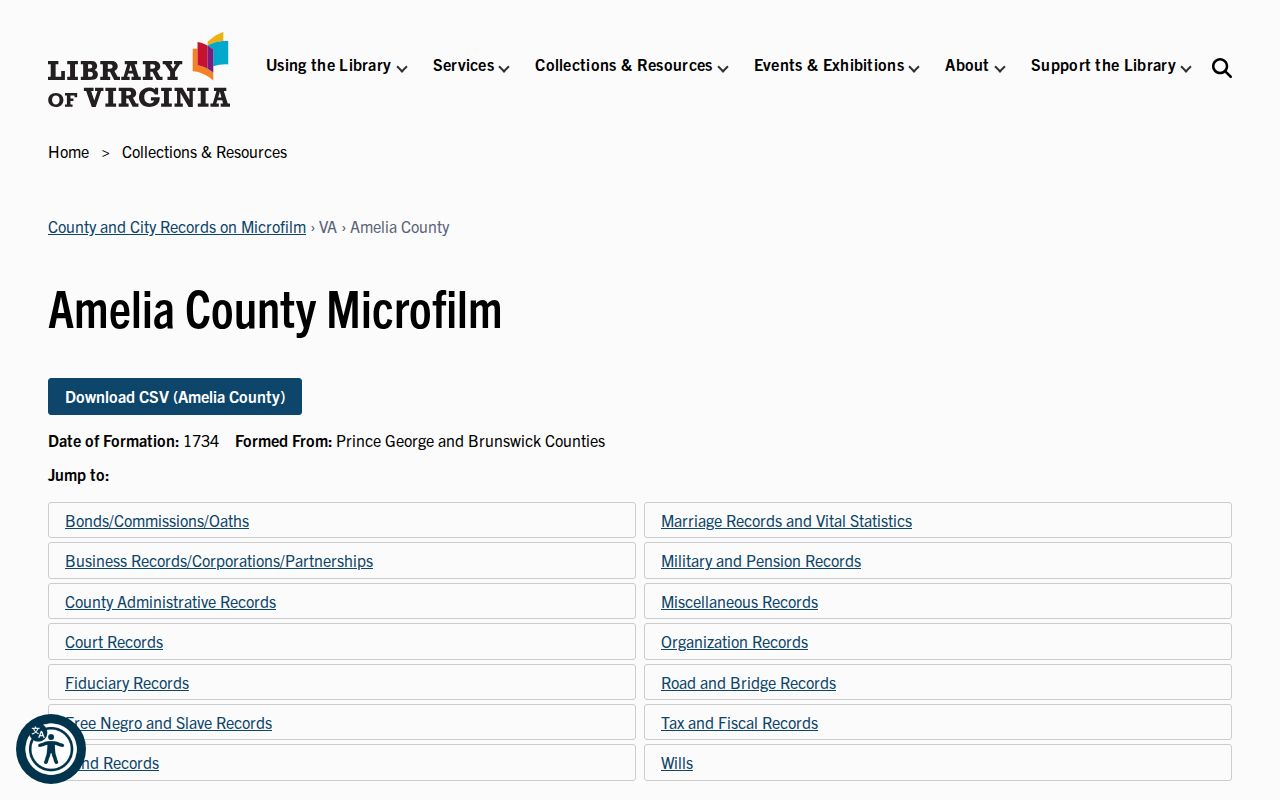
Date ranges on microfilm deed indexes mark where each reel of Amelia County records begins and ends. Treat them as a pointer to the next archive source rather than proof of full online coverage.
Amelia Land Before County Formation
Amelia County was carved from Prince George and Brunswick land. The act took effect March 25, 1735. A deed chain reaching further back may sit under a parent county instead. County lines moved later, too. Instruments tied to one parcel can surface in Prince Edward or Nottoway. It depends on where the land lay when the document was recorded. A former owner's home address is not enough to pick the right parent county. Match the tract description, the watercourse, the road, and the names of neighboring landowners against a historical map. That comparison should come before choosing where to search. The LVA catalog helps here. Its early court orders, surveyors' returns, and land series can pin down the jurisdiction. They can also point to the next index worth checking.
Estate Transfers Among Amelia Former Owners
Not every transfer looks like a sale. A will can devise land. An administrator or commissioner may sell it. Heirs sometimes divide a tract among themselves. Amelia's catalog includes a general will index covering 1734 through 1926, plus later will and fiduciary indexes to search. Turn to those records whenever a deed chain changes names abruptly or an owner vanishes without a familiar deed of sale. Then go back to the land records. Hunt for a commissioner's deed, a partition instrument, an heir conveyance, or a court-approved sale that names the parcel. Probate explains the family ties and who held authority, but only the deed or court order links that event to the property. A death record alone never proves title passed.
Amelia Plats Reveal Older Parcel Shape
Older Amelia deeds rarely carry a street number. Instead they name a road or a church. They may also cite the courthouse, an adjoining family, or an acreage figure. The LVA catalog lists Southall plats from 1815, 1853, and 1885. It also holds processioners' records that may describe boundaries as they were walked. Those sources can explain how a current parcel connects to an older tract. Still, a plat has limits. A modern map cannot settle the question. It cannot prove the old tract and today's tax parcel are one and the same. Trace every parent parcel, split, resurvey, and adjustment in the chain before drawing that conclusion. When a line stays unclear, request the recorded plat and a survey. A name match alone is not enough.
Separate Same-Name Amelia Owners
A shared surname can create a false chain in no time. Search under initials and spelling variants. Try spouses, trustees, executors, commissioners, and "et al." phrasing as well. Then compare the land itself, because the land rarely lies. Acreage, the road frontage, adjoining owners, and any prior deed cited in the text will usually separate two Amelia residents who happen to share a name. Residence in the county alone is thin proof that a person owned a given parcel. Log the details as you go. Record the exact party names, the instrument type, the date and reference, the parcel language, and any link still unresolved. A later deed may change the acreage or mention a split. Stop there. Trace the parent tract and its recorded plat before working farther back through the deed records.
Amelia Archival Records Beyond Deeds
The ARVAS description spans Amelia records from 1736 to 1914 across 43 boxes. It draws on the Circuit Court, the Historical Society, and private individuals. None of the items appear online. The finding aid still tells you which boxes to request. The Library of Virginia adds another layer. It holds militia records, veterans' files, Masonic Lodge #101 material, free and enslaved records, and Freedmen's marriage records. These can help tell same-name people apart when deed records alone fall short. The collection description is not a deed index. Treat it as a locator for a box or series. Then return to the land books to establish title. Review the ARVAS Amelia collection description before planning an archive request.
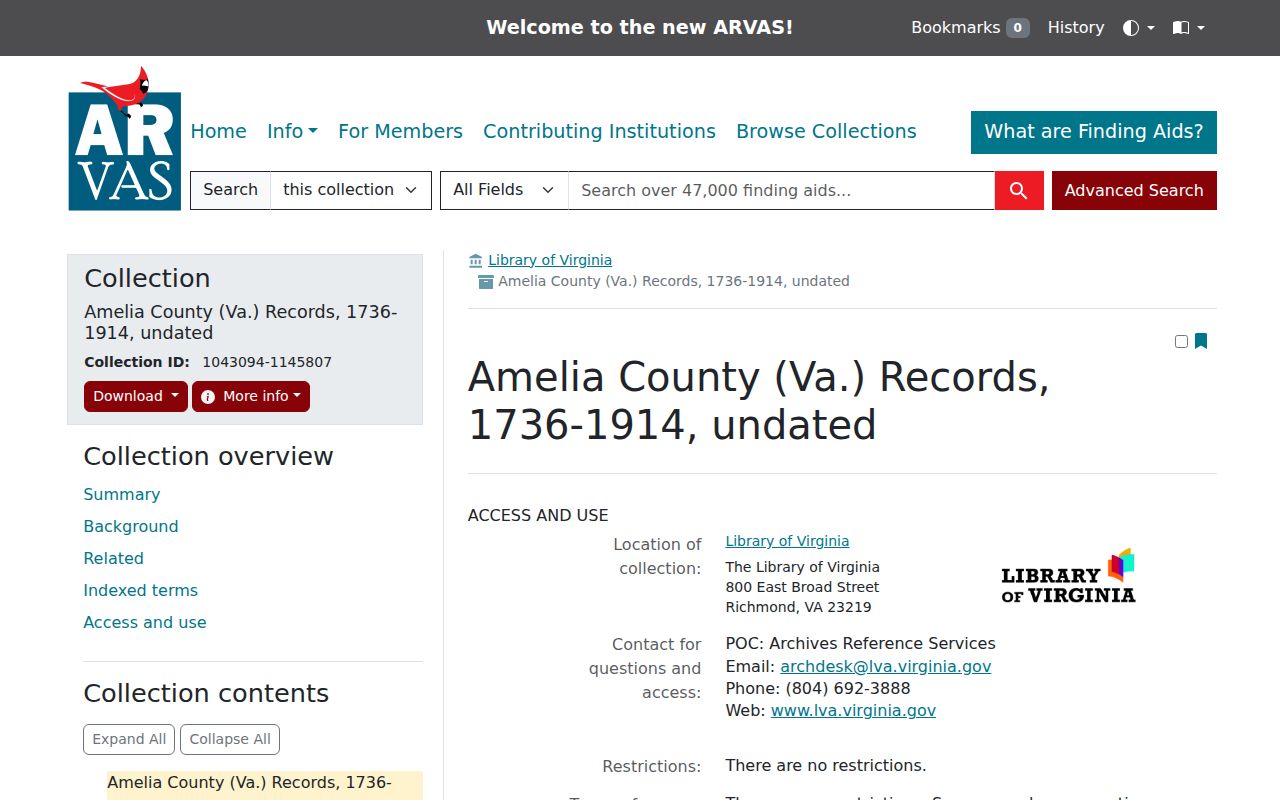
Archival context can help identify a former owner without substituting for the recorded chain.
Virginia Vital Records and Amelia Heirs
A death record can anchor the date for probate research. It cannot transfer land. Virginia Code §32.1-271 keeps recent vital records confidential for set periods. Birth records become public after 100 years. Death, marriage, divorce, and annulment records open after 25 years. Legal exceptions still apply. Older archival descriptions may reflect an earlier rule. Read them with care. For a certified copy, VDH wants a written request, identification, and the applicable fee. The state's access notice spells out the ID requirements. Take an eligible, lawful route. Then tie any estate finding back to the Amelia deed. That court record is what actually settled the property. Check Virginia vital-record ID requirements before requesting a certified document.
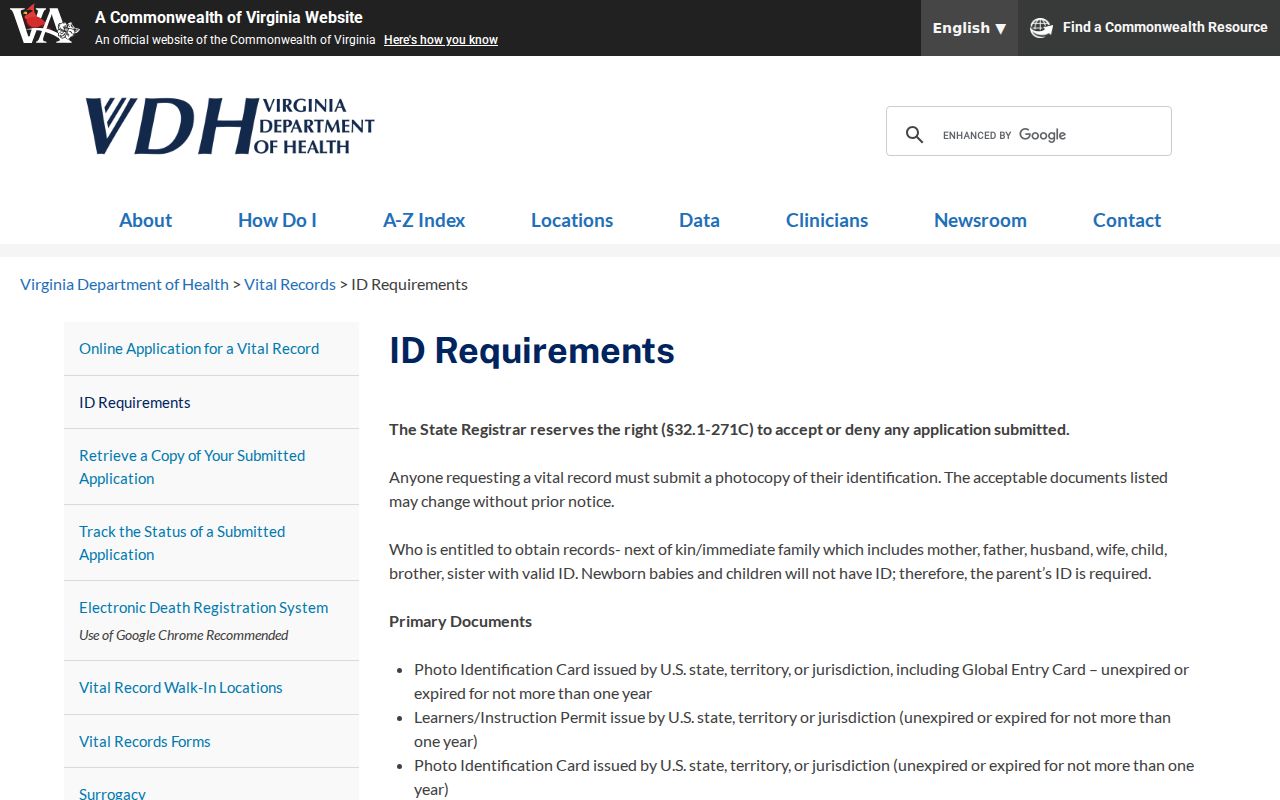
These access rules govern certificates only. Amelia's Circuit Clerk keeps the public deed chain, and it stays open. The Virginia Department of Health vital-record FAQ summarizes access and ID guidance for certified copies.
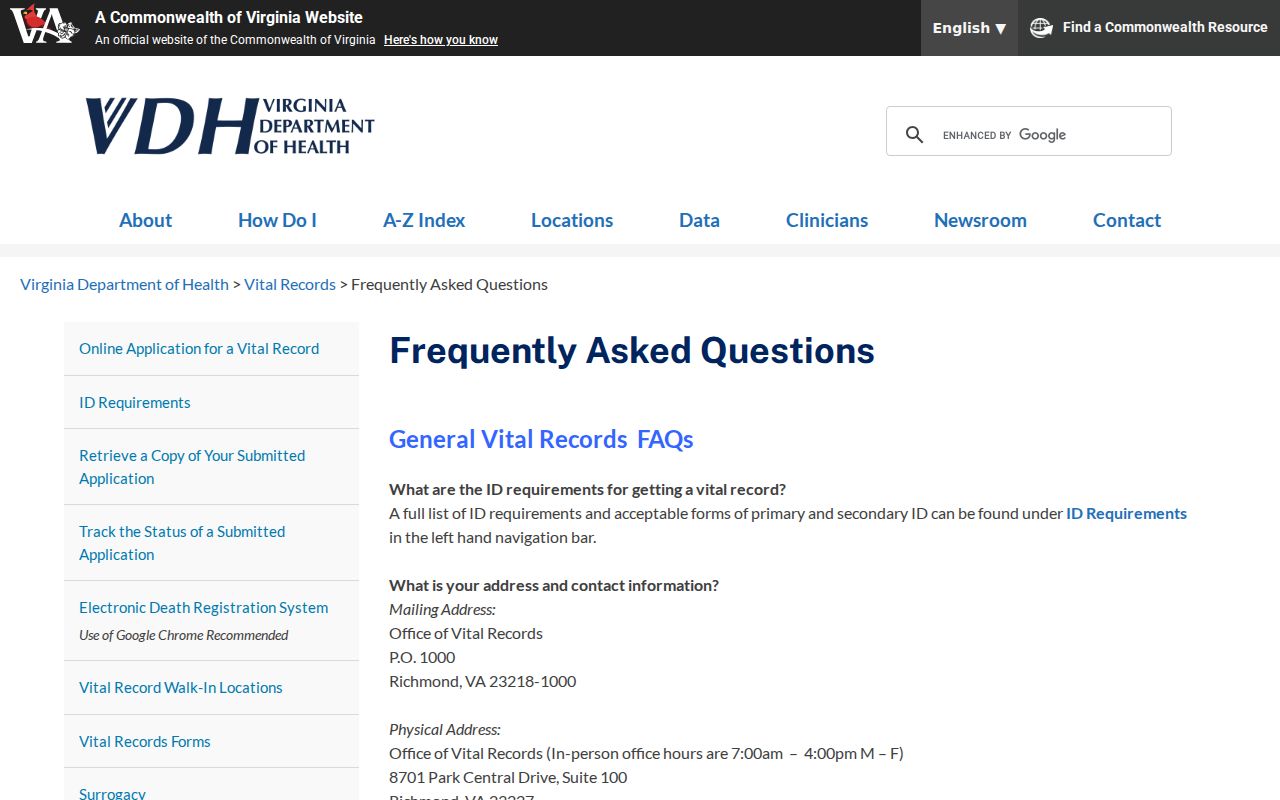
Check the current state instructions before requesting a certificate to support an estate-history search.